The birds of Isla Contoy National Park
 Diana Gonzalez : Aug 20, 2021, 5:21:12 PM
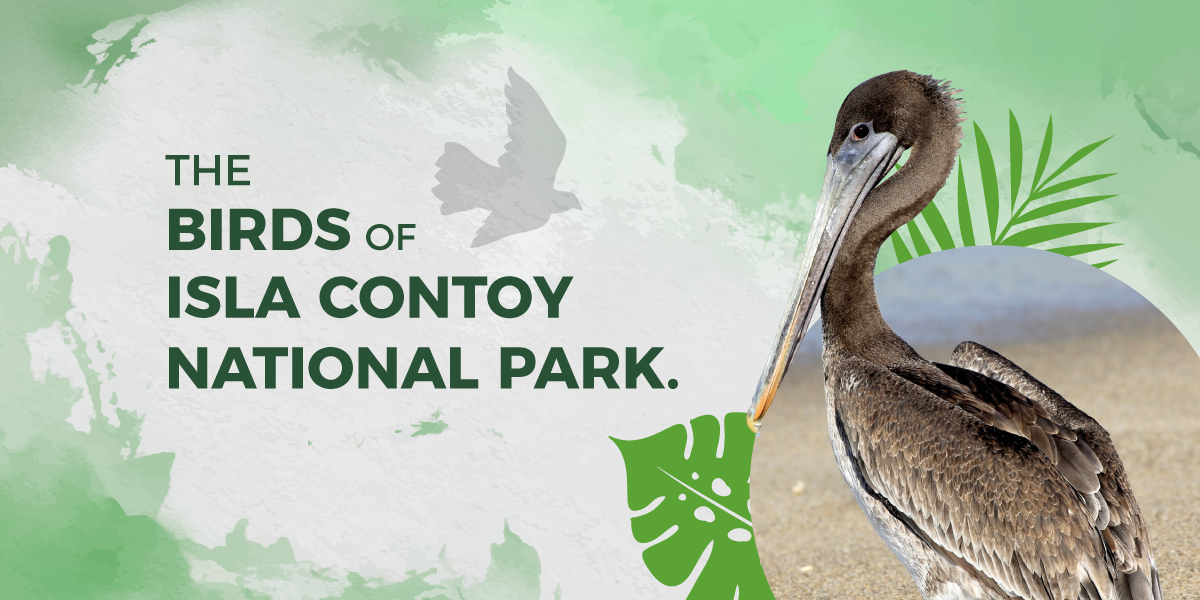
Isla Contoy is the most important bird sanctuary in the Mexican Caribbean. There are 173 different species of birds protected by park rangers.



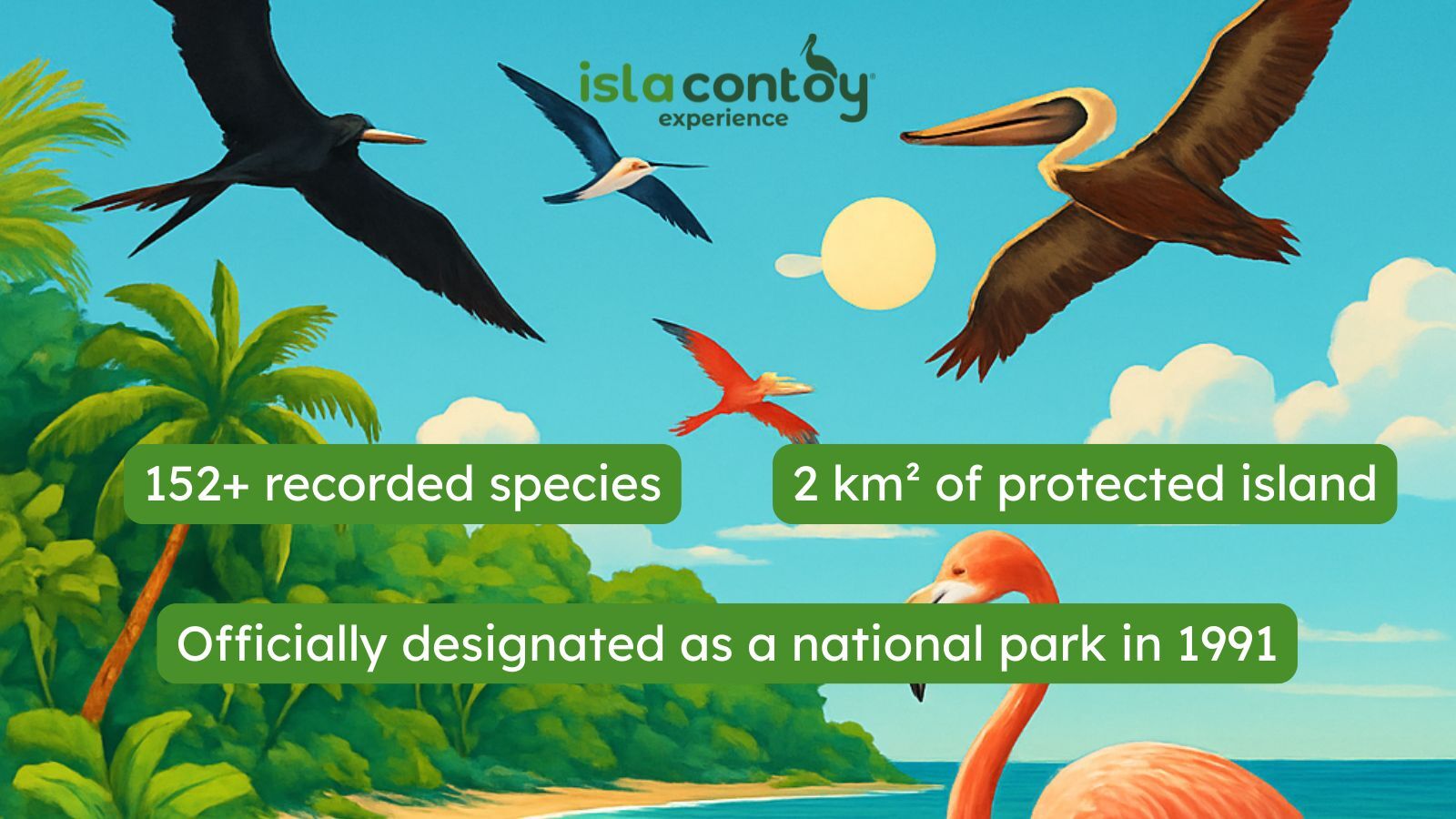
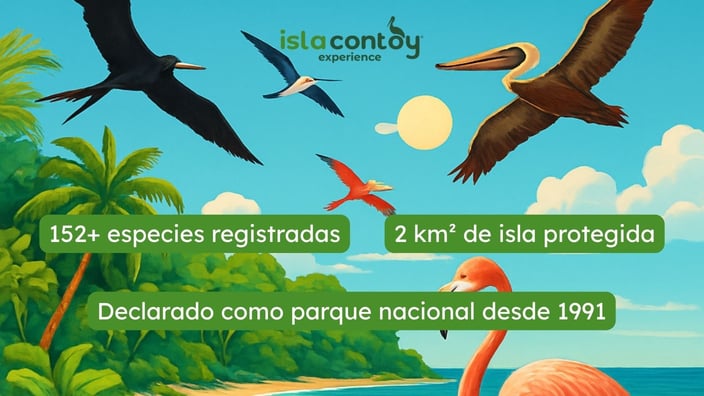
The most protected reserve in the Mexican Caribbean is home to unique nesting colonies and migratory routes, making it a must-see destination for any bird lover.
Isla Contoy, declared a National Park in 1998 and an Important Bird Conservation Area (IBA), is the main seabird nesting site in the Mexican Caribbean. With just 2 km² of surface area and with access strictly controlled (maximum 200 visitors per day), it offers an unparalleled bird-watching experience. Here are the 10 most emblematic species, when to see them, and how they arrive on the island.
Fregata magnificens
Resident of Isla Contoy
It is the most iconic species of Contoy. With a wingspan of up to 2.3 m, it is the largest bird in the world in relation to its weight. Colonies of hundreds of individuals nest on the island, where the male inflates his red gular pouch to attract the female.
It cannot leave the water, so it steals food from other birds (it is considered a kleptoparasite).
Best season: all year round.
Nesting: November to April
.jpg?width=700&height=467&name=Fragata%20Magn%C3%ADfica%20(1).jpg)
Sula sula
Resident of Isla Contoy
Isla Contoy is home to the only nesting colony of this species in Mexico. Two plumage morphs are present (white and brown), and they feed in spectacular swoops from heights of up to 30 m (98 ft). They lay only one egg per season.
They can dive to depths of up to 2 m and fly up to 150 km in search of food.
Best season: all year round, with a peak from November to March.
.jpg?width=700&height=467&name=Pajaro%20Bobo%20de%20patas%20rojas%20(1).jpg)
Phoenicopterus ruber
Occasional
The American flamingo is a visitor from the Celestún and Río Lagartos Reserve. Its intense pink plumage comes from the carotenoid pigments of the shrimp it eats. They travel in small groups in the island's mangrove zone.
A flamingo without pigments in its diet loses its pink color in a few weeks.
Best season: winter from October to March
.jpg?width=699&height=466&name=Flamenco%20Americano%20(1).jpg)
Pelecanus occidentalis
Resident of Isla Contoy
The smallest pelican in the world and the only one that dives from the air to fish. In Contoy, colonies can be seen nesting in the mangroves. It swoops down from 10 m and can catch fish up to 30 cm long.
Its gular pouch can hold up to 3 times as much water as its stomach.
Best season: all year round, although with peak activity from December to April.
.jpg?width=699&height=524&name=Pel%C3%ADcano%20Caf%C3%A9%20(1).jpg)
Leucophaeus atricilla
Migratory
The Laughing Gull is a migratory species from the southern U.S. and northeastern Mexico. Its distinctive call sounds like human laughter. During the winter, it forms large flocks on the beaches of Contoy and is one of the most abundant gulls in the Caribbean.
Best season: October to November
Migratory route
Gulf coast → Yucatan → Quintana Roo from October to November.
.jpg?width=700&height=467&name=Gaviota%20Reidora%20(1).jpg)
Thalasseus maximus
Resident of Isla Contoy
It is considered the largest tern in the world. Contoy is one of the most important nesting sites in Mexico, with colonies of hundreds of pairs. Its black crown and reddish-orange bill make it unmistakable. It dives to fish with extraordinary precision.
They can live up to 25 years in the wild.
Best season: April to September (nesting season), though it is present year-round.
.jpg?width=700&height=525&name=Charr%C3%A1n%20Real%20(1).jpg)
Egretta tricolor
Resident of Isla Contoy
Elegant and slender, this heron lives permanently in the mangroves of Contoy. Its tricolor coloration (slate blue, white, and brown) is characteristic. It actively hunts by running through shallow waters to corner fish, unlike other herons that wait motionless.
Usually nests in mixed colonies with frigatebirds and pelicans.
Best season: all year round. Nesting: March to July.jpg?width=699&height=550&name=Garza%20Tricolor%20(1).jpg)
Chloroceryle americana
Resident of Isla Contoy
The smallest of the three kingfishers present in Yucatan. Its bright green plumage and rufous chest make it spectacular. Perches motionless on low branches above the water to detect fish and dive. Very common in the mangrove channels of the island.
And although it is only 19 cm long, it can dive up to 1 m deep to catch fish.
Best season: all year round, especially from November to April.
.jpg?width=700&height=466&name=Mart%C3%ADn%20Pescador%20Verde%20(1).jpg)
Onychoprion fuscatus
Seasonal
The most oceanic tern in the world. Arrives in Contoy between May and August to nest in large colonies in rocky and sandy areas. Its dark back and white belly are perfect for camouflage during its flights over the Atlantic. It can remain in the air for months without touching land.
Best season: May to September (nesting season).
Migratory route
Caribbean → Gulf of Mexico → Contoy (April to May)
.jpg?width=700&height=467&name=Charr%C3%A1n%20Oscuro%20(1).jpg)
Pandion haliaetus
Migratory
The osprey is one of the most impressive migratory raptors. It arrives from northern America to escape the boreal winter. Its fishing technique is unique: it soars up to 40 m, detects fish using ultraviolet vision, and dives with its talons forward. Its toes have sharp spines to hold slippery fish.
Best season: September to April (boreal winter).
Migratory route.
North America → Gulf coast → Yucatan → Contoy September to October
.jpg?width=700&height=525&name=%C3%81guila%20Pescadora%20(1).jpg)
Birds such as osprey and black-headed gull follow the Gulf Coast from the USA and Canada, crossing Veracruz, Tabasco, and the Yucatan Peninsula before arriving in the Caribbean in September-October.
Dusky terns and red-footed boobies arrive from the southern Caribbean and the Venezuelan or Colombian coasts between April and May, following fish-rich ocean currents.
Local movements
American flamingos move from the reserves of Celestún and Río Lagartos, in Yucatán, starting in October, traveling just 200-300 km to winter in the calmer waters of northern Quintana Roo.
The absence of land predators, the rich fisheries of the Yucatan river, the legal protection of the National Park, and low human disturbance make the island an ideal stopover and nesting point on the Mexican Caribbean route.
|
Arrive at dawn Between 6 and 9 am is when the colonies of frigate birds, pelicans, and terns are most active. The light is perfect for photography. |
8x42 Binoculars Binoculars of at least 8x42 mm will allow you to distinguish plumage details even in birds flying over the inner lagoon. |
|
Best time: November to April During the boreal winter, resident nesting and migratory wintering birds converge, maximizing the diversity of species seen in a single day. |
Silence and distance Nesting colonies are sensitive to noise. Keep at least 50 feet away to avoid disrupting breeding and to respect park regulations. |
Join ContoyExperience and visit the island with guides specialized in avifauna. Limited capacity to respect the ecosystem. Only 200 visitors per day in the whole park.
✓ Guide on board
✓ Departure from Cancun
✓ Small groups
✓ Snorkel included

 Diana Gonzalez : Aug 20, 2021, 5:21:12 PM
Isla Contoy is the most important bird sanctuary in the Mexican Caribbean. There are 173 different species of birds protected by park rangers.
 Diana Gonzalez : Nov 29, 2021, 1:48:07 PM
Isla Contoy is not only a Bird Sanctuary, it is a Natural Protected Area and home to many different species of land and marine animals.

 Giovanna Ricalde : Jun 30, 2023, 10:39:30 AM
These are 5 reasons why you have to visit Isla Contoy this 2023. Find here the expectation and the reality of the island.